
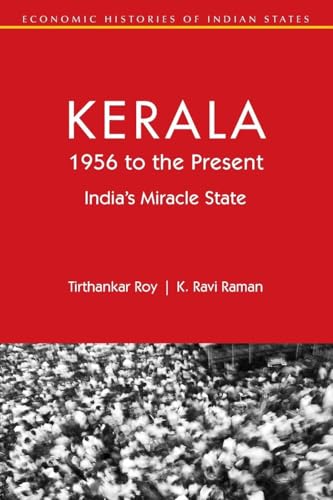
KERALA 1956 TO THE PRESENT : INDIAS MIRACLE STATE / BY TIRTHANKAR ROY AND K RAVI RAMAN
Material type: TextLanguage: English Publication details: UK : CAMBRIDGE UNIVERSITY PRESS , 2024 .Description: 170pISBN:
 - 9781009521659
- 23 330.954 ROY/K
| Item type | Current library | Home library | Call number | Materials specified | Status | Barcode | |
|---|---|---|---|---|---|---|---|
 Book
Book
|
Dept. of Arabic General Stacks | Dept. of Arabic | 330.954 ROY/K (Browse shelf(Opens below)) | TEXT | Available | ARA11656 |
Kerala is different, but not in the way we think.' Economic change in this southern state has fascinated economists. Most studies focused on the state's unusual human development, asked how a poor and economically stagnant state could achieve high levels of education and healthcare and pointed to politics and government policy to answer the question. Little of that scholarship took history seriously. History, this book says, shows that the foundations of human development were laid before the formation of the state and were owed to many factors besides politics. The striking thing about the state is its unusual income growth, which has been faster than most states since the 1990s. The question the authors ask is, 'How could an income-poor state break out of stagnation so dramatically?' The answers consider past globalisation, labour mobility, a legacy of welfare spending, and the positive ways these features interacted since India's economic reforms.
IN ENGLISH
There are no comments on this title.