
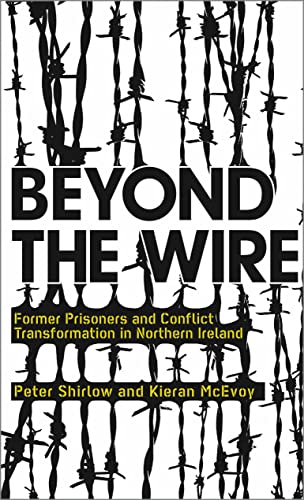
Beyond The Wire : Former Prisoners And Conflicts Transformation In The Nothern Ireland.
Material type: TextPublication details: London, Pluto Press, 2008.Description: 185pISBN:
 - 9780745326313
- 364.809416 SHI
| Item type | Current library | Home library | Call number | Status | Barcode | |
|---|---|---|---|---|---|---|
 Book
Book
|
Dept. of Islamic Studies Book Cart | Dept. of Islamic Studies | 364.809416 SHI (Browse shelf(Opens below)) | Available | ISL8456 |
Browsing Dept. of Islamic Studies shelves,Shelving location: Book Cart Close shelf browser (Hides shelf browser)


This book provides the first detailed examination of the role played by former loyalist and republican prisoners in grass roots conflict transformation work in the Northern Ireland peace process. It challenges the assumed passivity of former prisoners and ex-combatants. Instead, it suggests that such individuals and the groups which they formed have been key agents of conflict transformation. They have provided leadership in challenging cultures of violence, developed practical methods of resolving inter-communal conflict and found ways for communities to explore their troubled past. In analysing this, the authors challenge the sterile demonisation of former prisoners and the processes that maintain their exclusion from normal civic and social life.
The book is a constructive reminder of the need for full participation of both former combatants and victims in post-conflict transformation. It also lays out a new agenda for reconciliation which suggests that conflict transformation can and should begin ‘from the extremes’.
The book will be of interest to students of criminology, peace and conflict studies, law and politics, geography and sociology as well as those with a particular interest in the Northern Ireland conflict.
There are no comments on this title.