
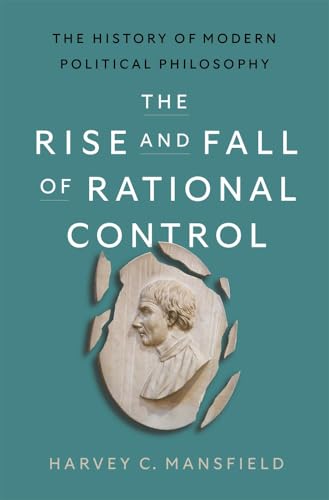
Rise and Fall of Rational Control: The History of Modern Political Philosophy
Material type: TextPublication details: Cambridge: The Belknap Press of Hardvard University Press, 2025Description: xii, 323pISBN:
 - 9780674298859 (HB)
- 320.01 MAN/R
| Item type | Current library | Home library | Collection | Call number | Status | Date due | Barcode | |
|---|---|---|---|---|---|---|---|---|
 Book
Book
|
Dept. of Philosophy Processing Center | Dept. of Philosophy | Non-fiction | 320.01 MAN/R (Browse shelf(Opens below)) | Checked out to Sneha B (PHILRS013) | 26/03/2026 | PHL4884 |
Browsing Dept. of Philosophy shelves,Shelving location: Processing Center,Collection: Non-fiction Close shelf browser (Hides shelf browser)

|

|

|

|

|

|

|
||
| 320.01 BAR/G Global Manifestos for the Twenty First Century: Rethinking Culture, Common Struggles and Future Change | 320.01 GAU/R Routledge Companion to Social and Political Philosophy | 320.01 HAW.P Political Philosophy after 1945 / | 320.01 MAN/R Rise and Fall of Rational Control: The History of Modern Political Philosophy | 320.01 SHA/K Kautilya’s Arthasastra | 320.01 VOS/P Political Philosophy: The Basics | 320.011 PIK/E Equality: What it Means and Why it Matters |
The Rise and Fall of Rational Control is a bold interpretation of centuries of intellectual revolutions. Based on Harvey C. Mansfield’s legendary Harvard course, taught for decades to rapt classrooms, this volume is both a grand work of ideas and an elucidating reflection on liberalism, its eclipse, and the possibility of renewal. Mansfield locates the birth of modern political philosophy in the work of Niccolò Machiavelli, the first to assert that the objective of politics is not to achieve wishful ideals of justice or virtue—as the ancients had it—but to manipulate the brute facts of the world in service of interests. Here rational control, free from the order of gods or God, is the key to achieving the modern order, which can liberate humans from slavery and conflict. Hobbes and Locke later develop Machiavelli’s modern idea, laying foundations for liberalism. Then comes the first crisis in the form of Rousseau, who introduces historical change into the very idea of reason, which itself is said to evolve. After Rousseau, history takes center stage, as witnessed in Kant, Marx, and Hegel. The second crisis of modernity arrives with Nietzsche, who casts doubt on reason itself. Ever since, political thought has been stranded in the desert of postmodernism, where Machiavelli’s necessities are replaced by faded subjectivity.
There are no comments on this title.